How Modern Rome Reshaped the Capitoline Museums
See how post-1870 excavations, Esquiline garden finds, underground galleries, and modern architecture transformed the Capitoline Museums.
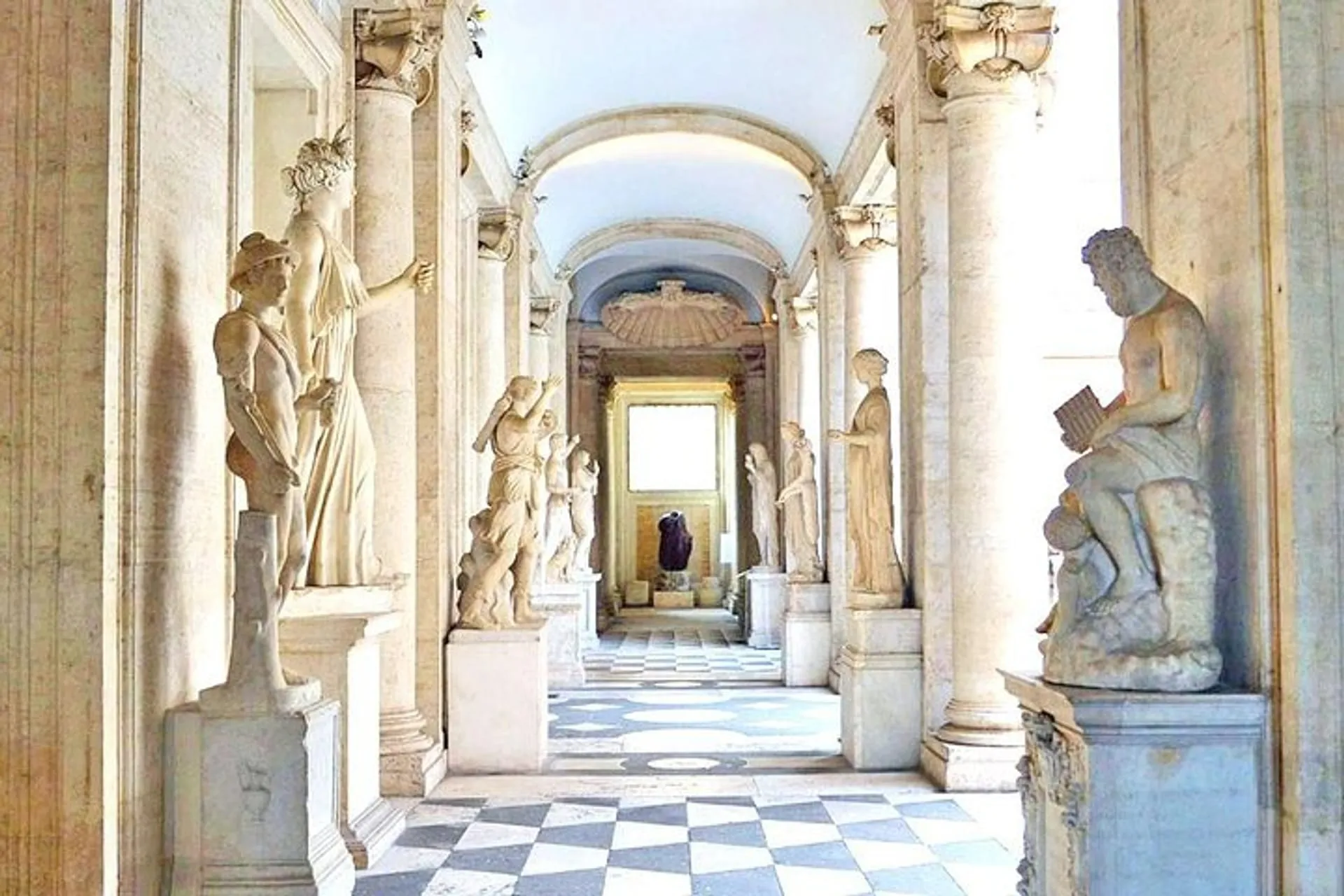
Many visitors imagine the Capitoline Museums as a collection assembled by Renaissance popes and left largely unchanged. In reality, the institution was transformed by the building of modern Rome. Roads, housing and public works exposed antiquities on a scale that forced the museum to expand both its collections and its architecture.
Rome becomes a capital
After Rome became the capital of unified Italy, construction accelerated. New districts rose beyond the old centre, and excavation cut through layers of ancient occupation. Sculpture, inscriptions, mosaics and architectural fragments entered municipal custody.
From 1876 onward, the museum enlarged its displays to accommodate this material. The finds differed from older papal acquisitions because they often arrived as archaeological groups tied to specific places. They could reconstruct the decoration and social meaning of ancient environments rather than simply enrich a gallery of masterpieces.
The rediscovery of the Esquiline gardens
The Horti collections are a major result. Elite Romans created luxurious garden estates on the Esquiline, later absorbed into imperial property. Nineteenth-century excavations in areas such as the Horti Lamiani recovered sculpture and architectural decoration of exceptional quality.
Commodus portrayed as Hercules is the best-known example. Its imagery of lion skin, club, apples, Amazons, globe and zodiac transformed imperial portraiture into a claim of divine and cosmic power. Nearby works, including the Esquiline Venus and decorative marbles, help reconstruct the splendour of an environment destroyed by later urban change.
Building beneath the piazza
In the late 1930s, an underground gallery linked the museum buildings beneath Piazza del Campidoglio. This was more than a circulation solution. It created access to the ancient road and structures below the modern square and provided a setting for Rome's vast epigraphic collection.
Around 1,400 inscriptions were installed in 1957. After a long closure, the Galleria Lapidaria reopened in 2005 with a more selective display of 130 inscriptions. Organised by themes such as law, religion, work, army and death, they reveal lives that monumental sculpture rarely records.
Machines and gods
Renovation on the hill during the 1990s created another unexpected expansion. Ancient sculptures were transferred to the former Centrale Montemartini power station. The temporary 1997 exhibition placed Roman gods and civic monuments against turbines, boilers and engines.
The juxtaposition was historically meaningful as well as visually striking: both the antiquities and the machinery belonged to periods when Rome was remaking itself. The display became permanent in 2001, giving the Capitoline collections a second major home.
The 2005 museum
The main complex reopened with a new glass Exedra by Carlo Aymonino, protecting the original Marcus Aurelius in a high, luminous space. The project also revealed and interpreted the foundations of the Temple of Jupiter Optimus Maximus and reorganised the Horti and Castellani collections.
Modern intervention did not replace the historic palace rooms. It created contrast: eighteenth-century sculpture galleries, Renaissance civic chambers, archaeological foundations and contemporary glass now coexist.
The Capitoline Museums are therefore a record of excavation itself. Their displays show not only ancient Rome but the consequences of later cities digging through it. The museum grew because Rome could never modernise without encountering its buried past.
Over de auteur

Editorial Team
Deze onafhankelijke gids is samengesteld uit officiële museuminformatie en gezaghebbende culturele bronnen; praktische details zijn op duidelijkheid beoordeeld en tijdgevoelige informatie is gemarkeerd voor controle.
Tags
Comments (0)
Loading comments...