Capitoline Pinacoteca: Essential Paintings Guide
See the essential works in the Capitoline Pinacoteca, including Caravaggio, Titian, Veronese, Rubens, Guercino, and Domenichino.
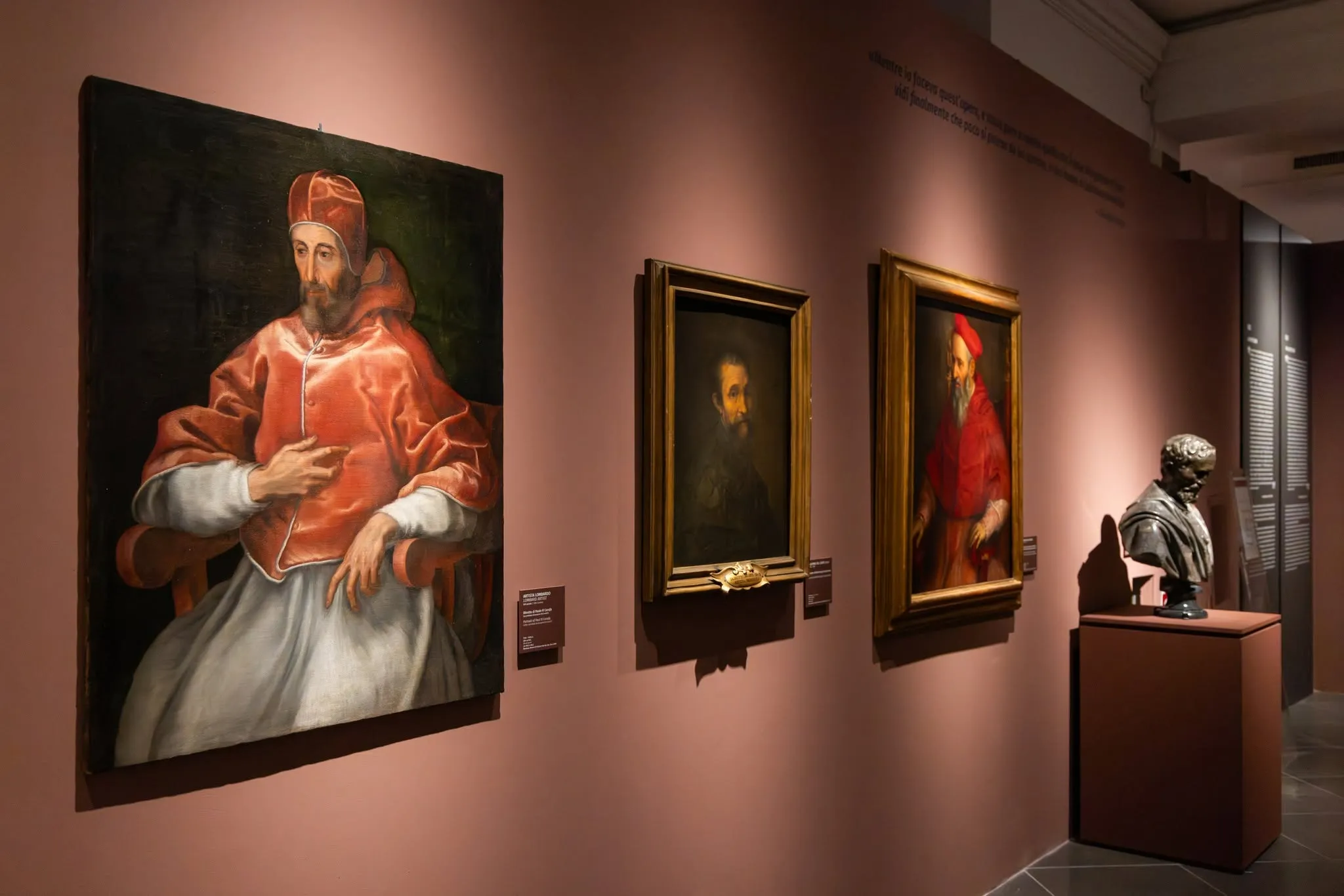
Ancient sculpture dominates the reputation of the Capitoline Museums, which makes the Pinacoteca one of central Rome's easiest major painting collections to underestimate. Formed in the mid-eighteenth century from the Sacchetti and Pio di Savoia collections, it is described by the museum as the oldest public collection of paintings.
Caravaggio: The Fortune Teller
Caravaggio's Fortune Teller, painted around 1596–1597, stages a seemingly simple exchange between a fashionable young man and a woman reading his palm. Their attention is intimate, but the scene contains a deception: she slips a ring from his finger while holding his gaze.
The painting's novelty lies in its refusal of grand historical action. Contemporary types, direct observation and controlled gesture create the drama. Look at the hands before the faces; the theft is quiet enough to be missed.
Caravaggio: Saint John the Baptist
The later Saint John the Baptist, dated 1602, is more ambiguous. The youthful figure is identified through context and tradition rather than a full set of conventional attributes. Deep shadow and the twisting pose make the sacred subject physically immediate without turning it into a polished ideal.
Seeing the two Caravaggios together shows how rapidly the artist could shift from social scene to psychologically charged religious image.
Titian and Veronese
Titian's Baptism of Christ, from 1511–1512, belongs to the artist's early maturity. Its landscape, colour and arrangement of figures invite slower viewing than a highlights sprint allows.
Veronese's Rape of Europa, painted around 1580–1585, presents myth through sumptuous colour and theatrical movement. Rather than reading it only as decorative splendour, notice how the composition leads the eye across stages of the narrative.
Rubens and Rome's foundation myth
Rubens's Romulus and Remus of 1612 revisits the story of the abandoned twins nourished by the she-wolf. It makes an instructive counterpart to the bronze Capitoline emblem elsewhere in the museum. One work condenses the myth into a civic symbol; the other expands it into a muscular Baroque narrative.
Guercino's Saint Petronilla
The Burial of Saint Petronilla, painted in 1621–1623, is a monumental altarpiece with two registers: burial below and heavenly reception above. Its original ecclesiastical function matters. The work was designed to organise devotion across a large architectural setting, not to be encountered as a small private picture.
Domenichino's Cumaean Sibyl
Domenichino's Cumaean Sibyl, dated 1622, combines idealised beauty with attributes of prophecy and learning. Its clarity offers a useful contrast to Caravaggio's darkness and Guercino's dramatic movement.
Planning the gallery
Allow forty-five minutes for a focused circuit and longer if painting is your main interest. Temporary closures can affect individual rooms; the Pietro da Cortona Room has recently been unavailable, so consult current notices.
The Pinacoteca is most rewarding when treated as a collection in its own right rather than an appendix to antiquity. It reveals how Rome's civic museum expanded from ancient symbols into a broader history of Italian and European art.
लेखक के बारे में

Editorial Team
यह स्वतंत्र गाइड आधिकारिक संग्रहालय जानकारी और प्रामाणिक सांस्कृतिक स्रोतों से संपादित है; व्यावहारिक विवरण स्पष्टता के लिए जांचे और समय-संवेदनशील दावे पुनः जांच हेतु चिह्नित हैं।
Tags
Comments (0)
Loading comments...