Capitoline Museums Hidden Details and Symbols
Decode overlooked symbols in Bernini's Medusa, Commodus as Hercules, Spinario, portraits, Marforio, mosaics, and museum architecture.
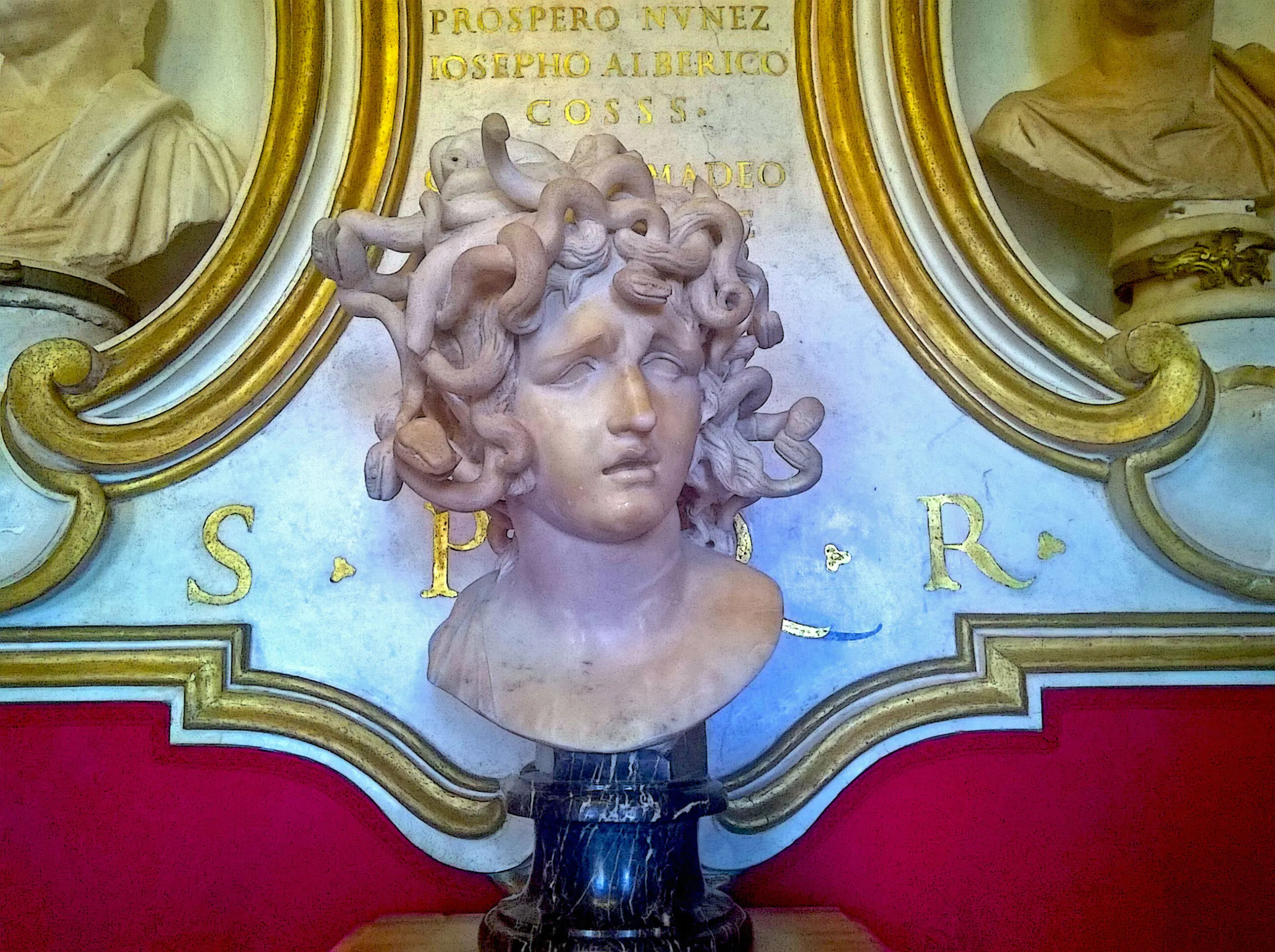
The Capitoline Museums reward close looking because many works communicate through attributes that modern visitors no longer read automatically. A necklace marks an ethnic identity; a fruit signals a heroic labour; a hairstyle promotes a dynasty. These details turn famous objects from attractive forms into historical arguments.
Medusa's moment of recognition
Bernini's Medusa does not simply reproduce the monster with snakes for hair. Her parted lips, tense brow and shifting expression suggest the instant she recognises her own transformation. The sculptor reverses the myth's usual direction: the petrifying creature is herself made stone.
The bust becomes a meditation on sculpture. Marble imitates living skin, hair and serpents while displaying its ability to stop a moment permanently.
Commodus builds a divine identity
The portrait of Commodus as Hercules contains an entire programme of rule. The lion skin and club identify Hercules; the apples refer to the Hesperides. Amazons kneel below, while globe and zodiac imagery extend the claim from physical heroism to cosmic order. Cornucopias suggest abundance, and marine figures help support the composition.
The portrait is not evidence that the emperor casually enjoyed costume. It is calculated political theology, presenting Commodus as a new Hercules and source of universal prosperity.
The Spinario's visual pause
The bronze boy removing a thorn is famous for naturalism, but its body and head draw on different Greek traditions. This eclectic construction mattered less to Renaissance viewers than the convincing concentration of an ordinary action.
Its small inward drama contrasts with the public authority elsewhere in the palace. In a collection of emperors, gods and heroes, absorbed attention becomes monumental.
The face called Brutus
The Capitoline Brutus acquired the name of Lucius Junius Brutus through tradition, not secure evidence. The severe face made the association persuasive because later viewers wanted the founder of the Republic to look austere and morally uncompromising.
The label teaches a broader lesson: portrait identity can be produced by expectation. Study the work's asymmetry, inlaid eyes and tight expression without forcing it to illustrate a biography.
Marforio speaks without moving
The reclining Marforio is a colossal river or Oceanus figure, but early modern Rome gave it a second identity as a talking statue. Anonymous satirical verses attached to such statues allowed the city to criticise authority through imagined dialogue.
Its meaning therefore combines ancient water imagery with later political folklore. Museum objects often acquire new functions after antiquity.
Portrait hairstyles as dates
In the imperial galleries, hair is historical evidence. Members of an imperial family promoted recognisable styles that communicated dynasty and fashion. Deep drilling creates dramatic shadow in later portraits, while beard styles can associate an emperor with military vigour, Greek learning or predecessor imagery.
Compare groups rather than isolated busts. Repetition reveals a visual policy.
Mosaics and materials
The Dove Mosaic uses tiny tesserae to create vessels, birds, water and reflection with painterly precision. Elsewhere, coloured marbles signalled the geographic reach and expense of empire. Stone type was not neutral: exotic material could embody conquest and access to distant quarries.
Architecture as a hidden label
The museum's rooms classify objects before a text panel does. An intimate cabinet makes Venus a privileged encounter; rows of busts produce dynastic comparison; the glass Exedra turns Marcus Aurelius into a civic centrepiece.
Look at the setting as carefully as the object. The Capitoline Museums do not merely contain meanings. Through rooms, sightlines and inherited display traditions, they continue to create them.
À propos de l’auteur

Editorial Team
Ce guide indépendant repose sur les informations officielles du musée et des sources culturelles fiables, avec signalement des données à revérifier.
Tags
Comments (0)
Loading comments...