Centrale Montemartini and the Capitoline Collection
Discover how Capitoline antiquities entered a former power station and why engines, turbines, and Roman sculpture create a meaningful museum.
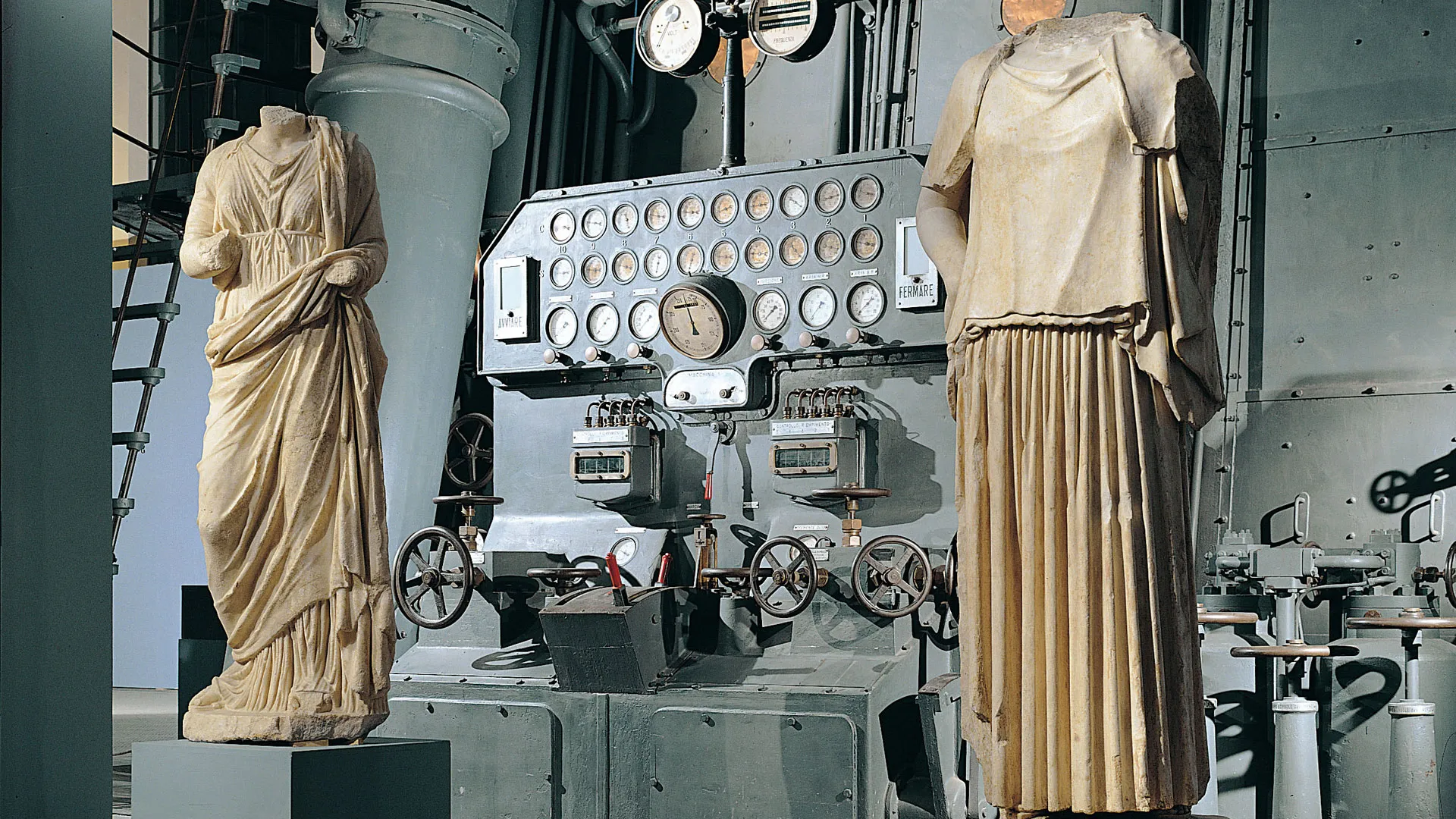
Centrale Montemartini is often described as the Rome museum where ancient statues stand beside engines. The contrast is memorable, but it is not a design gimmick. The museum grew from a practical extension of the Capitoline collections and now tells how two different eras built modern Rome.
From power station to museum
The plant on Via Ostiense was Rome's first municipal public electricity station, inaugurated in the early twentieth century and later named for Giovanni Montemartini. Its turbines, boilers and industrial spaces survived after the plant's original role changed.
During renovation of the Capitoline Museums in the 1990s, sculpture needed a temporary home. The 1997 exhibition commonly known as Machines and Gods placed archaeological works in the former power station. The experiment proved so effective that Centrale Montemartini became a permanent museum in 2001.
Why the combination works
Ancient marble and industrial steel differ in material, colour and scale, yet both belonged to ambitious systems of urban power. Roman temples, gardens and public buildings expressed the reach of an imperial city. The electrical plant represented the infrastructure of a capital modernising after Italian unification.
The juxtaposition also changes looking. White marble stands out against dark machinery, while the presence of engines prevents sculpture from floating in an abstract gallery. Each object is framed by another era's technology.
What the collection adds
The museum holds parts of the municipal archaeological collection rather than a random selection of duplicates. Works from Republican temples, monumental complexes and excavations help explain discoveries made as Rome expanded.
This makes Centrale Montemartini a direct continuation of the Capitoline story. The hilltop museum explains civic collecting and famous masterpieces; the power station gives more space to archaeological groups and the modern city that unearthed them.
Planning a combined visit
Do not treat the sites as adjacent. Centrale Montemartini is in the Ostiense area, so travel time must be included. Visiting both on one ticket product or city-museum plan can make sense, but live inclusions, validity and exhibition supplements should be checked before purchase.
A strong approach is to visit the Capitoline Museums first. There you learn how nineteenth-century construction enlarged the collection. Visit Centrale Montemartini later to see the consequence: material displayed within a preserved monument of modernisation.
Allow at least ninety minutes at Centrale Montemartini. Industrial-heritage enthusiasts and visitors reading the archaeological groups closely may need two hours.
Accessibility and families
The former industrial building has been adapted with lifts and accessible routes. Current official information describes wheelchair availability, seating, tactile orientation, audio description, sign-language video, children's content and family facilities. Verify details before travel, particularly if a specific service is required.
Children often respond well to the scale of the engines and the contrast with gods, animals and human figures. The museum's app offers themed multimedia routes, including content designed for younger visitors.
A museum about Rome's repeated reinvention
The greatest insight at Centrale Montemartini is chronological. Archaeological sculpture entered the municipal collection because modern construction disturbed ancient layers. That collection then occupied machinery made obsolete by further technological change.
The museum preserves both outcomes. It shows that Rome's identity is not a choice between ancient beauty and industrial modernity. The city repeatedly builds over, uncovers, relocates and reinterprets its past.
Sobre el autor

Editorial Team
Guía independiente elaborada con información oficial y fuentes culturales fiables, señalando los datos que deben volver a comprobarse.
Tags
Comments (0)
Loading comments...